Ragdoll Blade
- 4.1
- Rating
- 10.00M
- Installs
- Free
- Price
 Analysis by App-foxy
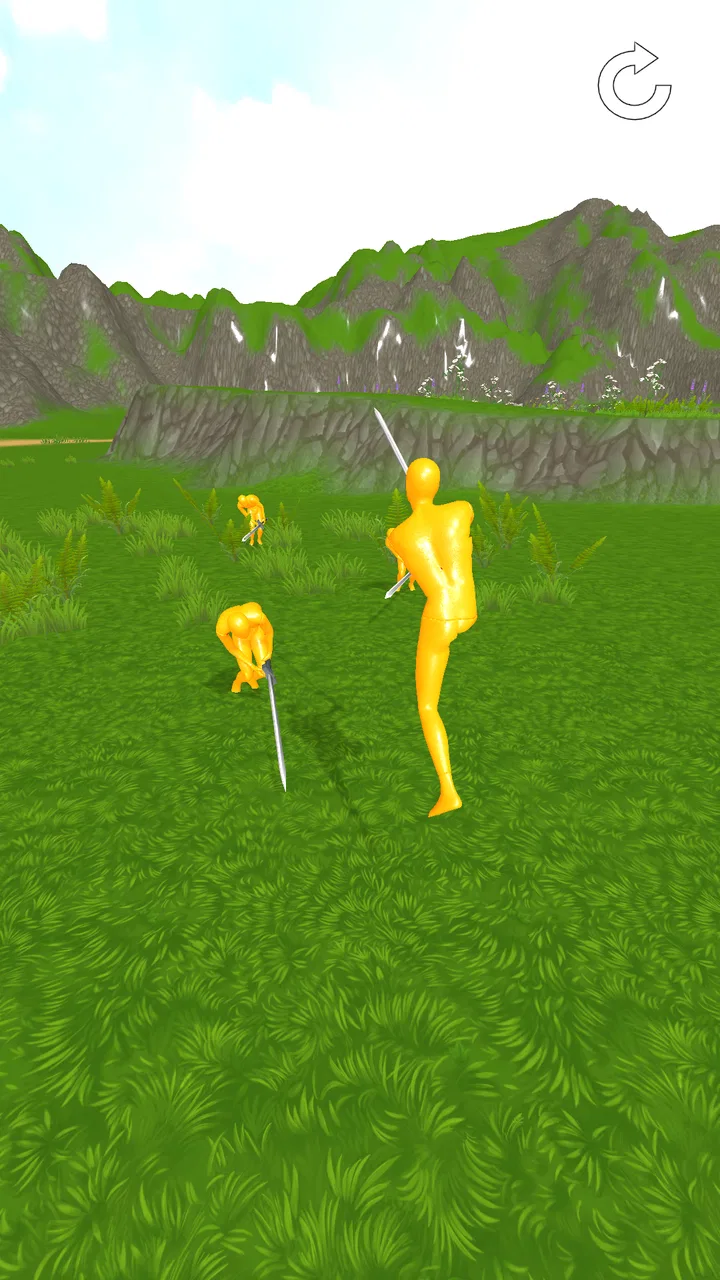
Ragdoll Blade is the sort of action game I open when I want a quick burst of hands-on chaos rather than a long campaign or a complicated control scheme. Its central appeal is easy to understand: I guide a blade through enemy-filled scenes and try to cut down everything in the way. That simple idea becomes more entertaining because the characters react like loose, physical ragdolls, so every swing has a slightly unpredictable result.
After spending time with it, I see the game less as a traditional combat adventure and more as a timing-and-positioning toy with action-game energy. The pleasure comes from finding a clean angle, making one decisive movement, and watching the hit play out. It is free to play, made by tatsumaki games, and aimed at players aged Everyone 10+. On Android, it requires version 6.0 or later, which makes it accessible to many older devices.
What matters most is not the short store summary or the compact name. It is the way the blade turns a basic attack into a small physics puzzle. I have to think about where the weapon will travel, whether one motion can catch several targets, and how much room I have before the enemies become a problem. That gives the game more character than a simple tap-to-defeat title.
You May Also Like

 Blood Strike: 2.5 Anniversary
Blood Strike’s Loadouts Turn Every Drop Into a Tactical Gamble
A close look at Blood Strike’s custom loadouts: how fast access to signature weapons reshapes its battle royale rhythm, rewards preparation, and narrows the gap between fights.

 Pandora - Music & Podcasts
Pandora’s Music Is Easy to Start, but Harder to Recover
Pandora’s strength is its low-effort path from a seed to a station. Its weak spot is how much confidence it asks you to place in connection, setup, and quiet recovery.

 8 Ball Pool
 Is Built on Rivalries, Rematches, and Routine
A close look at the rivalries, rematches, shared routines, and unanswered safety questions that turn a quick pool match into a persistent mobile community.

 Samsung Music
’s Quiet Strength Is Playing What You Already Own
Its reach comes less from spectacle than from dependable access to a personal library. That simplicity is both the app’s strongest retention engine and its ceiling.

 AccuWeather: Weather Radar
AccuWeather Review: A Quick, Clear Forecast for Everyday Decisions
For everyday plans, the best forecast is the one you can understand quickly. AccuWeather makes rain timing, radar, and local conditions easy to act on, with a few trade-offs.

 Hill Climb Racing
Why Hill Climb Racing Still Turns Crashes Into One More Run
A tiny car, a bumpy hill and one more upgrade: Hill Climb Racing keeps resurfacing because its simple chaos makes every near-miss feel personal.
More From Our News Desk



Why the blade is the whole experience
The verified short description calls it “Ragdoll Blade,” but the useful way to understand the game is to focus on the blade as the main decision-making tool. I am not managing a large inventory, building a character, or learning a broad collection of abilities. My attention stays on the relationship between movement, reach, and enemy placement.
That narrow focus is a strength. Because there are fewer systems competing for attention, I can start playing almost immediately. The game suits the moment when I have only a little time and do not want to remember a quest, inspect equipment, or wait through a long explanation. A short session can still feel active because each encounter asks for a direct physical response.
The ragdoll presentation also changes how I judge success. In a conventional action game, defeating an enemy usually feels like checking off a health bar. Here, the motion itself is part of the reward. A well-placed cut can send opponents tumbling in a way that feels more satisfying than a plain visual effect. The result is playful rather than grim, which helps explain why the age guidance is Everyone 10+.
I would not describe the combat as deep in the role-playing sense. The interest comes from execution, not from building a complicated strategy over many hours. If you want a large map, a story with dialogue, or a detailed progression system, this will feel deliberately small. If you enjoy the immediate feedback of a physics-based action toy, its limited scope is easier to appreciate.
How the attack feels in practice
My first useful adjustment was to stop treating every enemy as a separate target. The better approach is to read the whole space before committing to a swing. When opponents are close together, the blade can become more valuable as a line through the group than as a tool for picking off one character at a time. That turns a basic attack into a quick question about angle and timing.
This is where the game’s capability has a real effect on play. The ragdoll response makes contact feel less fixed, so I cannot always assume that an enemy will fall exactly where expected. A hit may create a moment of safety, but it can also leave another target in an awkward position. I have to react to the result rather than follow a perfectly predictable script.
That unpredictability is entertaining when I am in the mood for experimentation. I can try a different approach, see how the group reacts, and improve my next attempt. It also means the game is not ideal for someone who wants every action to produce a precise, repeatable outcome. The physical comedy comes with a small loss of control.
A practical tip is to avoid rushing the opening movement. I get better results when I first identify the nearest threat and the largest cluster, then choose a path that handles both if possible. A hurried swipe may defeat one enemy while leaving the rest positioned to interrupt the next move. The game rewards a brief pause before action, even though the overall experience remains fast.
Another useful habit is to think about recovery, not only the initial cut. After the blade passes through a target, I need to consider where I will be standing and which enemy remains active. This is a small but important trade-off: the most dramatic swing is not always the safest one. A controlled attack can be more useful than a flashy attempt that leaves the scene messy.
A good fit for short, everyday sessions
The best everyday scenario for me is a short break when I am waiting for a train, sitting before an appointment, or taking a few minutes away from work. I can start without preparing a loadout or remembering a complicated objective. The immediate loop makes sense even if I have not played for several hours, and the physical reactions give each attempt enough variation to avoid feeling completely automatic.
It also works well as a casual game to pass between other activities. I would not choose it for a quiet evening when I want a story or a long-form challenge, but I would choose it when I want something I can understand within seconds. The free price removes the need to make a large commitment before finding out whether the central mechanic suits me.
For younger players within the stated age guidance, the simple premise and cartoon-like ragdoll action may be easier to approach than a realistic combat game. Still, I would not assume that the game is perfect for every child. The appeal depends on enjoying repeated action and physical reactions, and some players may quickly want more variety than this focused format provides.
One of the less obvious strengths is that it can function as a low-pressure test of visual timing. I am not memorizing an elaborate combo list; I am practicing when to act and how to use space. That makes it approachable for someone who finds traditional action games intimidating, while still giving experienced players a reason to refine their movement.
Where it differs from usual action alternatives
Compared with a conventional side-scrolling action game, Ragdoll Blade places less emphasis on exploration and more on the immediate result of each attack. There is no need for me to search through a large environment to find the fun. The scene itself is the puzzle, and the blade is the answer I keep adjusting.
Compared with a character-based action game, it also asks less from the player in terms of long-term planning. I am not choosing between several heroes or learning a broad set of special moves. That makes it easier to pick up, but it also limits the feeling of personal development. Players who enjoy mastering distinct characters may find the focused toolset too narrow.
It sits closer to a physics playground than to a full combat campaign. That comparison is important because it sets the right expectation. I would recommend it to someone who values satisfying motion, quick decisions, and replaying a simple idea from different angles. I would point a fan of story-heavy action games toward a different option, because the blade alone cannot provide that kind of long-term narrative motivation.
The trade-off behind the simple design
The biggest limitation is also the clearest design choice: the game’s identity depends heavily on one central interaction. If cutting through ragdoll enemies remains enjoyable for you, the simplicity feels clean. If it does not, there are fewer secondary systems to rescue the experience.
I also noticed that the physics can make a result feel less exact than I expected. A swing may look successful but leave the encounter less tidy than planned, or an enemy may move in a way that changes the next decision. I see this as part of the charm, but players who prefer strict competitive precision may experience it as friction.
The format can become repetitive if I play for too long without a break. My solution is to treat it as a compact action game rather than a title that must occupy an entire evening. Short sessions preserve the satisfying impact of the blade, while extended sessions make the limited central loop more obvious.
There is also a difference between being easy to start and being easy to master. The controls and premise are approachable, but consistently choosing the best angle requires attention. A new player can enjoy the spectacle immediately, while a more patient player can focus on cleaner attacks and better use of enemy grouping. That layered accessibility is one of the game’s better qualities.
Because it is free, it is especially easy to try without treating the download as a major purchase decision. I still recommend checking whether your device runs Android 6.0 or newer before installing. The current version is 2.2.4, so keeping the app updated is sensible if you want the intended current experience rather than relying on an older build.
Who will get the most from it
I think the strongest audience is people who enjoy compact action games with a physical twist. If you like experimenting with trajectories, watching enemies tumble, and improving a quick encounter through better timing, the game has a clear reason to stay installed. It is also a good choice for players who want something more interactive than a passive time-killer but less demanding than a full action adventure.
The game has already found a sizeable audience, with over five million installs and an average rating of 4.2 from around nine thousand ratings. Those figures suggest that the straightforward concept has broad appeal, but they should not be read as a promise that every player will enjoy the same loop. The experience is quite specific, and its value depends on whether the ragdoll blade interaction feels satisfying to you.
I would be more cautious recommending it to someone who wants deep progression, competitive ranking, a strong narrative, or precise combat systems. Those players may prefer a conventional action title with more clearly separated weapons, abilities, and objectives. Ragdoll Blade is better when I judge it on its own terms instead of expecting it to become a miniature version of a larger genre.
It is also not my first choice when I want a relaxing puzzle with no pressure. Although the controls are simple, the action still asks me to respond quickly and manage threats. The game can be casual, but it is not entirely passive. That distinction helps avoid disappointment for players looking for a slower, more thoughtful experience.
My final take after using the game
The blade is not just the weapon; it is the game’s complete language. Every enjoyable moment comes from understanding how one movement can change the whole scene. The ragdoll reactions make that movement feel lively, while the compact structure makes it easy to return to during a spare minute.
My honest recommendation is to try it if you want free action that starts quickly and does not bury its main idea under menus or complicated systems. Give it a fair chance by playing with positioning in mind rather than simply attacking as fast as possible. The difference between random swiping and deliberate cutting is where most of the useful depth appears.
At the same time, I would keep expectations realistic. This is not the right choice for a long story, detailed character building, or highly controlled competitive combat. Its appeal is narrower and more immediate. For me, that focus works because the physical feedback makes even a familiar encounter feel worth replaying for a while.
In the end, Ragdoll Blade succeeds when I want a small action playground that turns enemy placement into a quick timing challenge. Developed by tatsumaki games and available free of charge, it is easy to recommend to curious casual players, especially those who enjoy playful physics. I would download it for short, energetic sessions, then move to a deeper alternative when I want progression or a broader adventure.
FAQs for Ragdoll Blade
01What is the main objective of Ragdoll Blade?
Ragdoll Blade is a physics-based action game where players control a ragdoll character armed with a variety of blades. The primary objective is to defeat opponents by skillfully maneuvering the ragdoll and utilizing the dynamic physics to your advantage. The game challenges players to master timing and strategy in order to progress through increasingly difficult levels.
02Are there any in-app purchases in Ragdoll Blade?
Yes, Ragdoll Blade offers several in-app purchases. Players can buy additional blades, character skins, and power-ups to enhance gameplay. While the game can be enjoyed without spending money, these purchases can provide a more customized and potentially easier gaming experience. It's advisable to set parental controls if the app is used by children.
03What are the system requirements for Ragdoll Blade?
Ragdoll Blade requires a device running Android 5.0 or iOS 11.0 and above. It performs best on devices with at least 2GB of RAM to ensure smooth gameplay, especially during action-packed sequences. Ensure your device has sufficient storage space available for optimal performance and regular updates to the game.
04Is Ragdoll Blade suitable for children?
Ragdoll Blade is rated for players aged 12 and up due to its mild cartoon violence and strategic combat elements. Parents should review the game content to determine if it aligns with their family’s preferences. Additionally, parental controls can be used to manage in-app purchases and screen time effectively.
05How can I improve my skills in Ragdoll Blade?
To improve your skills in Ragdoll Blade, practice is key. Spend time learning how the physics affect movement and attacks. Experiment with different blades and strategies to find what works best for you. Watching tutorial videos and joining online forums can also provide tips and tricks from other experienced players.
Pros
- Engaging physics-based gameplay.
- Wide variety of challenging levels.
- Simple controls for easy play.
- Entertaining ragdoll animations.
- Frequent updates with new content.
Cons
- Occasional in-app purchase prompts.
- Ads can be intrusive at times.
- Limited character customization options.
- Requires internet connection to play.
- May drain battery quickly on some devices.

Ragdoll Blade
Gallery